
Incorporating Plant-Based Proteins into Your Diet: A Step Toward a Better Future
“An increasing number of scientific studies confirm that including plant-based proteins in the regular diet is a step in the right direction.”,
Marek Petráček and Petr Böhm, Managing Directors
Plant-Based Proteins Are Surrounded by Myths
At VETO ECO s.r.o., we have been producing vegan products for over 30 years. During this time, we have encountered various myths about plant-based meat alternatives, including skepticism about the quality of plant proteins. That’s why we bring you facts backed by research and expert supervision from Dr. Ľuba Lapšanská.
What Proteins Are and Why Their Source Matters
Proteins are the fundamental building blocks of the human body. They are essential for muscle formation, enzymes, hormones, and the proper functioning of the immune system. While most people rely on animal sources (meat, eggs, dairy products), an increasing amount of research points to the health benefits of plant-based protein sources.
💡 Did you know that daily protein requirements vary depending on age, physical activity, and other factors?
| Group | Recommendation (g/kg body weight) | Example (70 kg person) |
|---|---|---|
| Adult at rest | 0.8 | 56 g |
| Athletes | 1.2–2.0 | 84–140 g |
| Seniors | 1.0–1.2 | 70–84 g |
| Pregnant and breastfeeding women | +20–30 g extra per day | — |
Plant-Based Proteins and Their Benefits
Out of the 20 known amino acids, the building blocks of proteins, our body can produce 11. The remaining 9 essential amino acids must be obtained from food. A well-balanced plant-based diet can fully cover all these needs and, according to many studies, may also bring several additional benefits:
- Proven health benefits:
Lower risk of ischemic heart disease and type 2 diabetes [1, 5],
Reduction of LDL cholesterol and blood pressure [2, 6],
Higher intake of fiber, vitamins, and antioxidants [7].
- Reduced mortality from lifestyle diseases: Studies show that replacing one serving of red meat with one serving of plant-based proteins reduces overall mortality by up to 19%, depending on the type of plant protein [3].
- Environmental impact: Production of plant-based proteins requires significantly less water and land and produces fewer greenhouse gas emissions [4].
Best Sources of Plant-Based Proteins
| Category | Description |
|---|---|
| 1. Legumes | Affordable, long-lasting, nutritious
Includes: lentils (red, green, black), chickpeas, beans (black, white, adzuki, mung), peas
Why choose them: 100 g cooked red lentils = approx. > 9 g protein [7]. They also contain fiber, iron, magnesium, calcium, and polyphenols. Recommended intake: at least 3–4 servings per week |
| 2. Soy and soy products | Complete protein
Includes: tofu (10–15 g protein/100 g, versatile, easily absorbs marinade flavors), tempeh (18–20 g/100 g, fermented, has a nutty flavor), edamame (immature soybeans with high nutritional value), textured soy protein (suitable for patties and sauces)
💡 Did you know that soy is a complete protein containing all 9 essential amino acids, and studies have shown that consuming up to 3 servings per day, as commonly done in Asian populations, is not associated with an increased risk of breast cancer [8]? |
| 3. Whole grains | More protein and lower glycemic index than refined versions Includes: quinoa, buckwheat, amaranth, bulgur, oats, brown rice – ideal as a side dish or in porridges and salads |
| 4. Nuts and seeds | Concentrated nutrition
Includes: chia, flax, hemp, and pumpkin seeds – rich in omega-3
Although not a primary protein source (approx. 5–8 g per 2 tablespoons), they increase the nutritional value and caloric density of meals – suitable, for example, for athletes or seniors. |
| 5. Seitan | Plant-based “champion” in protein content – approx. 25 g/100 g Easily flavored and has a texture similar to meat. Not suitable for people with celiac disease or gluten intolerance. |
| 6. Plant-based meat alternatives | Products based on pea, soy, or wheat protein. Ideal for transitional periods – taste and texture resemble traditional meat dishes. |
Practical Strategies for Easy Incorporation of Plant-Based Proteins into Your Diet
- Gradual Introduction – One Meatless Day per Week
For easier incorporation of plant-based proteins into your diet, we recommend a gradual approach. Start, for example, with “Meatless Monday” using recipes from Indian, Arabic, Mediterranean, or even Czech cuisine. You can also find inspiration on our Vegi Steak websites.
- Smart Combinations – Replace Part of the Meat in Recipes
Bolognese sauce: Replace half of the ground meat with lentils or a plant-based alternative.
Goulash: Use plant-based sausages, beans, or tempeh.
Breakfast: Enrich smoothies or porridges with plant protein — chia or flax seeds, hemp powder, or oats.
- Practical Tips for Every Day
Spreads and pâtés: Hummus, tofu pâté, or red lentil spread will help you prepare quick and nutritious snacks.
Meal prep: Cook larger batches of legumes in advance and store them in the fridge. This saves time and ensures you always have them ready.
Sufficient calorie intake and variety: Plant-based diets are often less calorie-dense — pay attention to your energy intake and combine different foods to achieve a complete amino acid profile.
In Conclusion: Plant-Based Proteins Are an Investment in the Future
Including plant-based proteins doesn’t have to be complicated or radical — make use of plant-based alternatives, tofu, spreads, and pâtés, and always keep a few portions of cooked legumes in your fridge. That way, nothing will catch you off guard. Their benefits are definitely worth a little planning. Quality plant-based sources such as legumes, tofu, grains, and seeds can fully meet the needs of all age groups — including athletes and seniors.
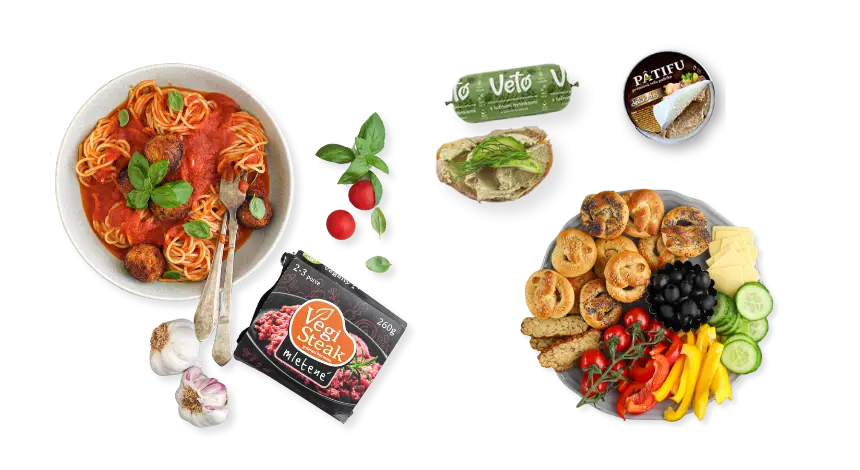
Discover our range of products for the grill or fork Vegi Steak, PÂTIFU plant-based pâtés or VETO legume spreads.
Sources:
Satija, A. et al. Plant-Based Dietary Patterns and Incidence of Type 2 Diabetes in US Men and Women. PLoS Med, 2016.
Li SS et al. Effect of Plant Protein on Blood lipids: A Systematic Review and Meta-Analysis of Randomized Controlled Trials. J Am Heart Assoc, 2017 Dec.
Pan A, Sun Q, Bernstein AM, et al. Red meat consumption and mortality: results from 2 prospective cohort studies. Arch Intern Med. 2012.
Poore, J., Nemecek, T. Reducing food’s environmental impacts through producers and consumers. Science, 2018.
Glenn AJ, Wang F, Tessier AJ, et al. Dietary plant-to-animal protein ratio and risk of cardiovascular disease in 3 prospective cohorts. Am J Clin Nutr. 2024;120(6):1373-1386. doi:10.1016/j.ajcnut.2024.09.006
Tomé-Carneiro J, Visioli F. Plant-Based Diets Reduce Blood Pressure: A Systematic Review of Recent Evidence. Curr Hypertens Rep. 2023
Kalorické tabulky – www.kaloricketabulky.cz
American Institute for Cancer Research (8/2021) – https://www.aicr.org/cancer-prevention/food-facts/soy/
WHO. Protein and amino acid requirements in human nutrition. Technical Report Series 935, 2007.