
Tofu: A Versatile Ingredient for the Modern Kitchen
Tofu is a traditional Asian food made from soybeans, with origins dating back more than 2,000 years to ancient China. In the traditional process, soybeans were ground into a mash and cooked in large vessels. The resulting soy milk was then curdled and pressed into a firm, cheese-like block. Thanks to its exceptional nutritional value, tofu gradually spread across the globe and became a popular staple — not only in vegetarian and vegan cuisine. The basic principle of its production has remained almost unchanged to this day.
Tofu is an exceptionally rich source of plant-based protein, providing 8–14 grams of protein per 100 grams. What makes it even more valuable is that it’s a complete protein—it contains all nine essential amino acids that the human body cannot produce on its own. Unlike animal products, tofu is free from cholesterol and low in saturated fat. On the contrary, it’s a valuable source of heart-healthy unsaturated fatty acids.
It is also a significant source of minerals such as calcium (especially when coagulated with calcium salts), iron, zinc, and magnesium. Tofu contains B vitamins and is rich in antioxidants—particularly isoflavones—which may help prevent certain chronic diseases.
Tofu excels in the kitchen thanks to its incredible versatility—it’s easy to prepare, absorbs flavors well, and works beautifully in both hot and cold dishes. There are several types of tofu with varying textures:
- Silken tofu – smooth and creamy, ideal for smoothies, desserts, and sauces
- Soft tofu – perfect for soups and delicate dishes
- Firm tofu – the most common type, suitable for frying, grilling, and braising
- Extra firm tofu – the densest variety, which holds its shape well when seared or roasted
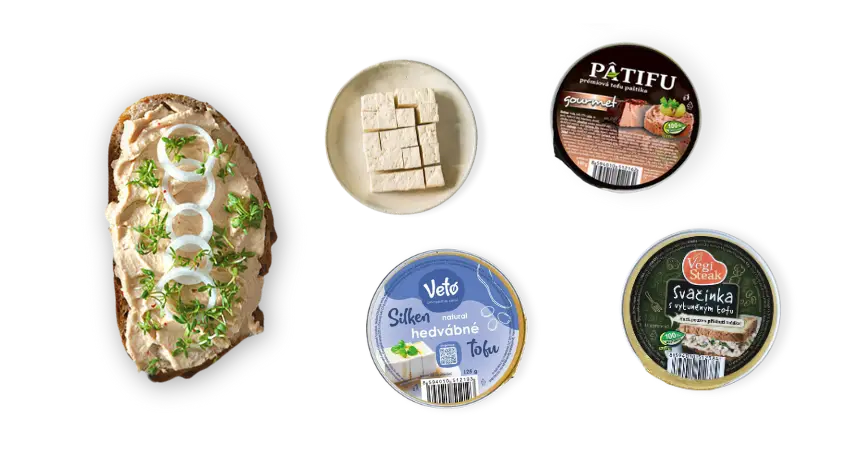
Thanks to this versatility, tofu is found in a wide range of plant-based products—including our own PÂTIFU, Vegi Steak a VETO lines.
💡 In China, tofu is most commonly served with soy sauce, garlic, ginger, chili, Sichuan peppercorns, fermented black beans, vegetables, or as a main dish alongside rice or noodles.
A valuable food even for children
Thanks to its nutritional value and good digestibility, tofu can be a suitable addition to a child’s diet. Once a child transitions to solid foods (usually after 6 months of age), tofu can gradually be introduced in its plain, natural form. However, for infants and toddlers, it is recommended to consult a pediatrician before introducing tofu, especially due to the potential risk of soy allergy.
For older children, accepting a new taste can be challenging, so it is advisable to start by adding small amounts of tofu to their favorite dishes. Gradual incorporation helps them get used to it and accept it as a regular part of their diet. Tofu is particularly beneficial for children due to its content of high-quality proteins and calcium, which is important for bone development.
Low glycemic index: suitable for diabetics
Tofu is naturally a low-carbohydrate food with a low glycemic index (below 20), which means it does not cause rapid spikes in blood sugar levels. It contains less than 2 grams of carbohydrates per 100 grams. Thanks to its high protein and healthy fat content, tofu helps maintain a long-lasting feeling of fullness, which is beneficial for weight management and overall health. It contains no added sugars, making it an excellent part of a balanced diet for diabetics of all types.
Naturally gluten-free: ideal for people with celiac disease
Tofu is naturally gluten-free, making it an ideal part of the diet for people with celiac disease or gluten intolerance. Its high content of plant-based proteins and minerals helps balance a diet that may lack certain gluten-containing grains. However, when purchasing ready-made tofu products, it is always advisable to check the ingredients to ensure no gluten-containing additives are included.
Excellent source of protein for athletes
Tofu is an excellent source of plant-based protein for athletes, which is crucial for muscle recovery and overall performance. It contains all essential amino acids, including branched-chain amino acids (BCAAs), which are important for muscle synthesis. The biological value of tofu protein is approximately 74 (for comparison, egg white scores 100).
Thanks to its versatility, tofu can be easily included in meals before or after training—such as in a hearty salad, smoothie, or a warm dish with complex carbohydrates. Another advantage for athletes is that tofu is easily digestible and does not burden the digestive system before exercise.
A staple ingredient in a vegan diet
Tofu is rightfully considered one of the most important and versatile plant-based protein sources in a vegan diet. In addition to a complete amino acid profile, it is rich in calcium (on average 200–350 mg per 100 g for tofu coagulated with calcium salts), iron (2–3 mg per 100 g), and other essential nutrients key to a balanced vegan diet.
Thanks to its ability to absorb various flavors, tofu can be prepared in countless ways—from creamy spreads and marinated steaks to fried cubes and even sweet desserts or fillings. Tofu can be used as a substitute for meat, cheese, eggs, and cream, making it an exceptionally versatile food for anyone following a plant-based diet.
Sources:
Diabetes Solutions Ltd. – https://klinio.com/hub/article/tofu-and-diabetes
FÉR potravina – https://www.ferpotravina.cz/tofu/tofu-veto-eco-s-r-o
Proveg – https://proveg.org/cz/5-pros/pro-zdravi/mineralni-latky/vapnik/
Our articles are prepared under the expert supervision of a medical doctor Ľuba Lapšanská.